
 Flexiheat UK
Solar Hot Water Cylinders
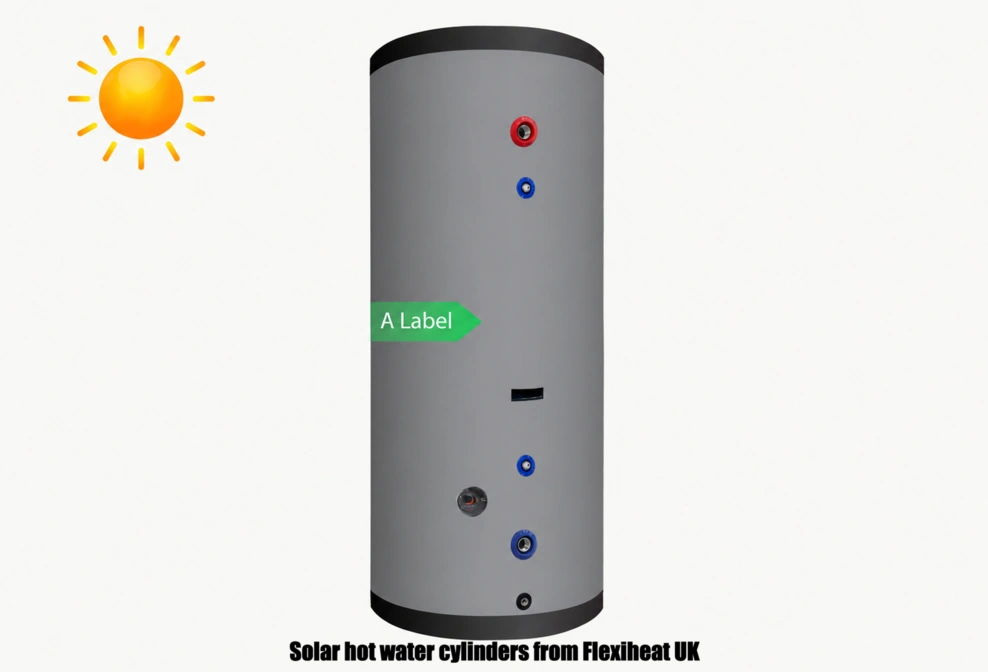
Solar hot water cylinders are one of the most popular alternative energy products these days for a solar water heating system, which uses ultraviolet radiation from the sun to transfer energy to heat water. Solar thermal systems are a dependable energy source that gives you hot water for the majority of the year.
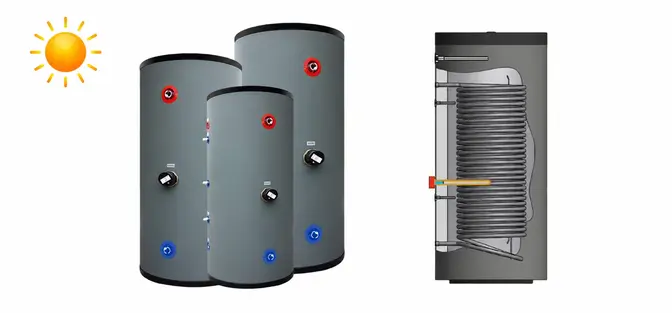
Indirect hot water cylinders for solar heating systems from Flexiheat UK
- Solar water heating systems are a fantastic option for those looking to reduce their energy bills and carbon footprint.
- solar water heating systems, via solar hot water cylinders are designed to provide domestic hot water for bathing, showering, hot taps, etc.
- A solar-powered water heating system can save you money on your energy bills, with potential savings of up to 50% for DHW solar water heating systems
- Solar water heating systems typically provide 40-50% of annual domestic hot water requirements.
- Most solar thermal systems are designed to provide hot water for baths, showers and hot taps only.
- Solar hot water cylinders can significantly lower carbon emissions by approximately 230kg to 510kg of CO₂ per year.
Solar water heating panels
Solar thermal panels (or solar water heaters) harness the sun’s energy to heat water for baths, showers, and taps, rather than generating electricity
How does solar water heating work?
Solar collectors (flat plate or evacuated tube types) are installed on a sun-facing roof and contain a heat transfer liquid, usually a mix of water and antifreeze, which absorbs solar energy from direct sunlight.
When the controllers detect the collector liquid is hotter than the water in the cylinder, a pump circulates the heated fluid through a coil inside the solar cylinder. This coil transfers its heat to the water stored in the cylinder without the liquids mixing.
The heated water is stored in the cylinder, ready for use. If the solar energy is insufficient (e.g., during winter or cloudy days) to heat the solar coil , a oil or gas boiler, an electric boiler (i.e. a system boiler) or an immersion heater can top up the temperature or even a heat pump
The controller also ensures the system only runs when sufficient solar energy is available, improving efficiency.
For those who fully understand what they require, we go straight into our solar cylinder options, but for those that require additional information on solar water heating, please see further down on this webpage.
Single-coil solar water heating cylinder product range
Flexiheat highly recommends using evacuated-tube solar collectors (more on these below on this webpage), as they are the best suited to the United Kingdom’s weather climate. A single cylinder, with a single coil and a backup immersion heater, is now a home-suitable, reliable domestic solar water heating system that will cover the needs all year round without the need for a backup boiler.
From 150 to 500 litres, these solar hot water cylinders are manufactured in duplex stainless steel, and the solar hot water tanks are rated for 6 bar of pressure and 95°C. The heating coil is rated for 10 bar and 120°C. These solar cylinders are ‘A’ ErP (Energy-related Products) rated for insulation values.
The production of hot water is directly related to the temperature to the coil in the cylinder. Here is the output data.

Solar coil indirect hot water cylinder DHW performance outputs from Flexiheat UK
Immersion heater
Where there is a shortage of solar-produced hot water, typically during the winter months, provisions are generally required to supply the domestic hot water needs. There is an assortment of solutions, ranging from electrical immersion heater backup to gas or oil-powered boilers or even a heat pump (you will need a twin-coil hot water cylinder when using a boiler backup).
Twin-coil solar hot water cylinder product range
The most popular solar cylinders have two heating coils, allowing one to be connected to the boiler central heating system and one to the solar thermal system. Twin coil cylinders allow a conventional boiler to provide backup heating when sunlight is insufficient.
The twin-coil design typically includes a solar coil at the base and a second coil near the top connected to a boiler or immersion heater for backup heating.

Twin-coil indirect hot water cylinders for two energy sources in duplex stainless steel from Flexiheat UK
Solar thermal systems are typically used in conjunction with conventional heating systems to meet hot water demands throughout the year.
These can be supplied in a twin-coil unvented solar cylinder version or an open-vented version.

Twin-coil hot water cylinder range – DHW output data at various flow temperatures to the coils
Unvented or vented hot water cylinder
These solar water heating cylinders can be supplied as either a solar unvented cylinder – we just supply the unvented kit to suit it – or as a vented solar water cylinder (no unvented kit is required). It is the same cylinder for both options.

Wall-mounted or floor-mounted unvented potable water kits for indirect domestic hot water cylinders.
Understanding Solar Water Heating Systems
There are two varieties of solar water heating systems on the market right now.
Solar flat plate collectors
The most popular, reliable, and affordable solar thermal technology for heating water for household usage has been the domestic flat plate collector. They are made out of a glass-covered, dark, insulated metal absorber plate that heats a liquid (such as water or antifreeze) before transferring it to an indirect storage cylinder. They can reduce annual water heating costs by up to 60%.

Solar flat plate collectors
Domestic flat plate collectors typically produce solar thermal fluid at temperatures between 60°C and 80°C in the summer. The temperature to the coil of the hot water solar cylinder affects the hot water production figures.
High heat loss results from the design’s intrinsic flaw of having no insulation above the absorber, which affects the performance. Due to this heat loss, flat plates perform significantly worse in cold weather; thus, there is an increase in the use of evacuated tube solar collectors in the UK due to their better solar water heating performance in the sunlight conditions that the United Kingdom and Northern Ireland receive.
In cloudy conditions, the energy output drops rapidly in flat plate collectors in comparison with evacuated tubes.
Flat plate collectors are generally more efficient in sunny climates compared to evacuated tube collectors.
Evacuated tubes solar collector type
The absorber strip in this kind of vacuum collector is housed in a pressure-proof, evacuated glass tube. In a U-tube or tube-in-tube system, the heat transfer fluid passes through the absorber directly or in a counter-current manner. Multiple single tubes, serially linked together, or units connected to one another through a manifold make up the evacuated tubes solar collector.

Evacuated-tube collector-type solar panels
A special fluid used in the heat pipe collectors starts to evaporate regardless of low temperatures. A heat exchanger warms the carrier fluid in the main pipe while the steam rises in the separate heat pipes. After that, the condensed liquid returns to the heat pipe’s base of the solar collectors.
Evacuated tubes have the benefit of operating effectively at low radiation levels and high absorber temperatures and can efficiently deliver temperatures up to 120°C to the heat exchanger coil of the solar hot water cylinder.
This allows higher performance and more hot water production.
Evacuated tube collectors are more efficient in colder conditions compared to flat plate collectors.
A study done in the country of Norway, which has a high-latitude and cloudy environment similar to that of the UK and Ireland but harsher wintertime temperatures than the United Kingdom, showed peak thermal efficiency hit 72% with excellent retention of heat due to the vacuum insulation preventing thermal losses during cold winters.
The study indicated that the facility yielded an average of 14.7 kWh per day of total energy.
The quantity of panels required depends on how much hot water the household will use, but for a practical solar hot water setup, you typically need about 1.5 m² to 2 m² of evacuated tube collector area per person.
The full report is here for reference –Vacuum Tube Solar Collectors in the Climate Conditions of Western Norway. Credit: MDPI.
Key Components of solar thermal systems
Solar collectors capture solar energy.
A heat transfer liquid circulates between collectors and a cylinder (normally an antifreeze-glycol fluid/water mix).
A hot water cylinder, often a twin-coil hot water cylinder, stores the heated water and usually allows for conventional boiler backup. We go into full detail on our twin coil cylinders range here – Twin coil cylinders
The pump and control system regulates fluid flow from the solar panels (also called solar collectors) and maximises energy use.

Indirect solar hot water cylinder installation set-up diagram Fexiheat UK – The entire solar thermal system works continuously on a loop. Thus, the fluid returns to the solar collectors for warming after releasing its heat into the hot water tank.
Differences of Photovoltaic vs Solar Thermal
PV (Photovoltaic ) solar water heating vs Thermal solar water heating
Thermal = Heat (direct heating fluid from sunlight)
PV = Photovoltaic (electricity from sunlight)
Solar thermal panels are more efficient at heating water than PV panels are at generating electricity, with efficiency rates of 70–90%.
Solar PV water heating relies on converting sunlight to electricity, while solar thermal systems use fluid-filled panels to collect heat and transfer it directly to the water via a heat exchanger. Both solar water heating systems are powered by renewable energy from the sun.
Thus, “PV” in this context refers specifically to the electricity-generating aspect of the solar water heating system.
Solar PV panel systems can be easier to retrofit to existing hot water tanks with immersion heaters and are highly flexible but may be less efficient at heating water compared to solar thermal systems in terms of direct input per roof area.
Solar PV water heating system
The PV in “solar PV water heating system” stands for “photovoltaic” referring to the process and technology that converts sunlight directly into electricity using semiconductor materials.
A solar photovoltaic water heating system uses electricity generated by photovoltaic panels to heat water, typically via an immersion heater, rather than using a fluid-based solar thermal collector. Thus, they are sometimes referred to as direct solar cylinders.
Solar cylinder benefits
Maximises the use of on-site renewable electricity rather than exporting low-value surplus power.
Simple installation of PV panels / PV array and PV-ready immersion heater or heaters-equipped hot water tanks if they are already present.
They can be integrated with battery storage systems and programmed for optimal energy usage, supply and savings.
Solar photovoltaic water heating systems provide a practical, low-maintenance method to heat water using solar-generated electricity, making them popular in homes with existing PV systems looking to boost hot water efficiency.
Benefits of solar water heating
Reduces conventional energy consumption for hot water by up to 60% annually and can function even in overcast weather.
Solar hot water systems are low maintenance, requiring only one service per year, and long-lasting, with up to 20 years of life.
Reduce carbon footprint
Reduces fuel bills and carbon footprint, providing reliable hot water year-round while reducing reliance on fossil fuels and the mains electrical grid.
Solar hot water cylinders are an efficient and environmentally friendly way to meet a household’s hot water needs by leveraging renewable solar energy as the primary heating source for your hot water requirements.
Energy-efficient upgrades, like solar cylinders, can increase a home’s EPC rating and overall market value while lowering energy demand through renewable energy with solar water heating with less reliance on the electrical grid system or gas for your home’s hot water.
Planning permission?
You probably won’t need planning permission for solar panels, as they are considered a ‘permitted development’, unless your property or home is in a conservation area or a listed building, but you might need to follow certain building regulations (please confirm the details with the installer or the local authority) for your solar water heating system installation.
Solar thermal panels can face anywhere between a south facing roof, the south east and the south west and are installed on the roof if you have the surface area, or solar thermal panels can be mounted into a frame on a flat roof or even installed on the ground level if there are space constraints.
Contact Flexiheat UK for further information
If you require further assistance, a price or cost, information, questions on our products or to purchase / order one of our solar hot water cylinder range, then please contact our customer sales team on 01202 822221 or click here for our email contact form to send an email.


 Flexiheat UK
 Flexiheat UK